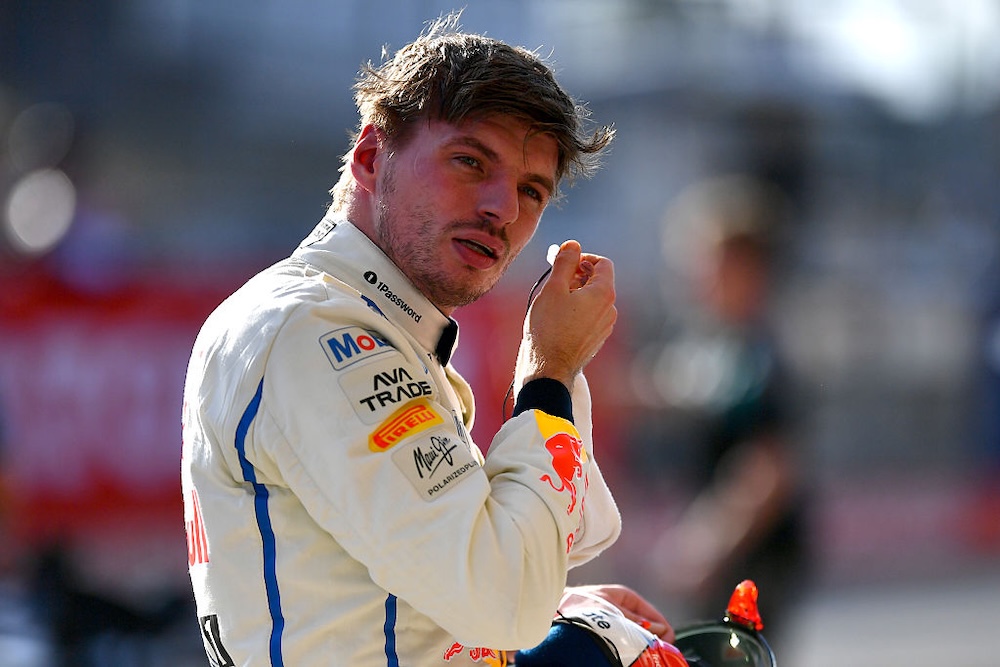
Dom Gibbons - Formula 1/Formula 1 via Getty Images
How F2 and F3 are providing the tools for F1 success
Colton Herta is just one race weekend into his debut Formula 2 campaign, having this season made the switch from IndyCar, in an attempt to improve his chances of competing in Formula 1 in the future.
That call was made in part due to the greater number of FIA Super License points on offer in F2 and F3, but it is not the only aspect that drove such a move.
The likes of Kimi Antonelli, Ollie Bearman, Isack Hadjar and Gabriel Bortoleto stepped from F2 and performed so well as rookies in 2025, with Antonelli already a race-winner and championship leader just three rounds into his second season.
Those recent strong performances from F2 graduates are proving the feeder series is providing the tools for drivers to succeed, according to the category’s technical director Pierre-Alain Michot.
“It's important for us to prepare them well and make sure that they get the tools from the feeder series to get used to the systems and everything,” Michot tells RACER. “So that's why even in F3 and F2, we have all the marshaling systems that are using the Virtual Safety Car. Until the end of last year, we had the DRS to make sure that they get used to the system.
“So there are a lot of things that are done in the background just to make sure that we can give them the tools to learn what they will get in F1.
“In F3, they have different compounds already. We have the soft, the medium and the hard, but only one compound per weekend. And in F2, they get two compounds during the weekend and they must do a pit stop during the feature race to change the compound. So they need to manage everything and they need to adapt quickly to all the changes and to all the features that they can get on the car.
“So it's a good learning curve for them step by step. And when they reach F1, they are quite well prepared. When we see all the rookies that went there last year and how they performed, we’re quite happy to see them there.”
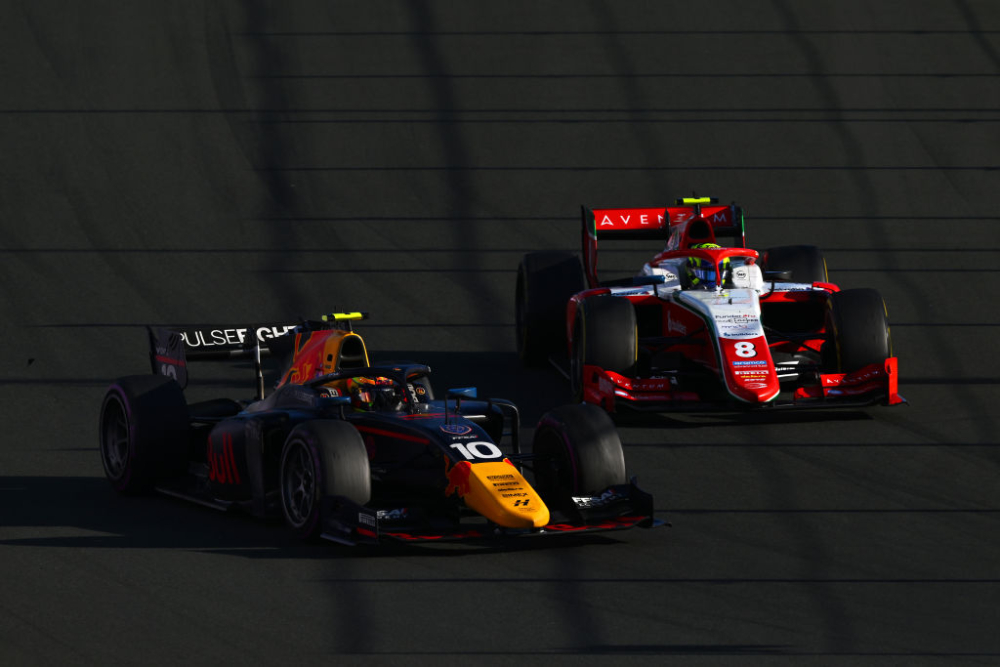
The likes of Isack Hadjar (left) and Ollie Bearman (right) have showed how good a proving ground Formula 2 is with their Formula 1 performances
The whole point of a feeder series is not only to prepare drivers, but to provide them with a platform to display their talents on as level a playing field as possible. But give all of them the exact same machinery with zero flexibility, and you’ll see some benefitting from being shorter or lighter than their rivals.
As another young American talent – Ugo Ugochukwu – goes in search of the F3 title, the challenges of his height have come to the fore, with his results picking up in his rookie year coinciding with when paint was removed from his car last season.
But that is an oversimplification of the situation, especially as Ugochukwu was a race-winner in Melbourne and leads the F3 standings early on in a fully-painted Campos car. In order to try and accommodate drivers of all shapes and sizes, Michot says F2 and F3 are set specific parameters to try and allow those of differing physical make-ups to find a comfortable seating position that does not cost performance.
“It's work we've done closely with the FIA to define what is needed to make sure that we can accommodate any driver in the car,” Michot says. “So the FIA defined what they call three mannequins – so they gave three sizes of mannequins, which go from 1.55m to 1.95m. These are the mannequins they gave us to start the design of the car.
“So we work closely with that to make sure that we have a cockpit which can accommodate all of these drivers using different pedal positions, different seat shelves available, so that they can have a good position to make sure that they can perform how they expect.
“This was quite a challenge – because as you can imagine, having 40cm difference between two drivers is quite massive – but we've managed it and we've worked a lot to make sure it happens.
“And some other features like the position of any component, like all the switches they have in the car to start the car, to change the brake balance and the steering wheel, we try to make sure that they can handle it properly without having to struggle too much with the tools, because the [steering wheel[ is standard for everyone, so we must accommodate any driver with it.
“We have to accommodate one with small hands and one with big hands just to make sure that it's in line with all expectations … We go down to every detail because in the end, if the driver has a steering wheel they can't hold because they have too small hands – because some are still quite young and they are still growing, so don't have adult hands already – the first time they sit in the car they might not have the hand capable to handle the steering wheel.
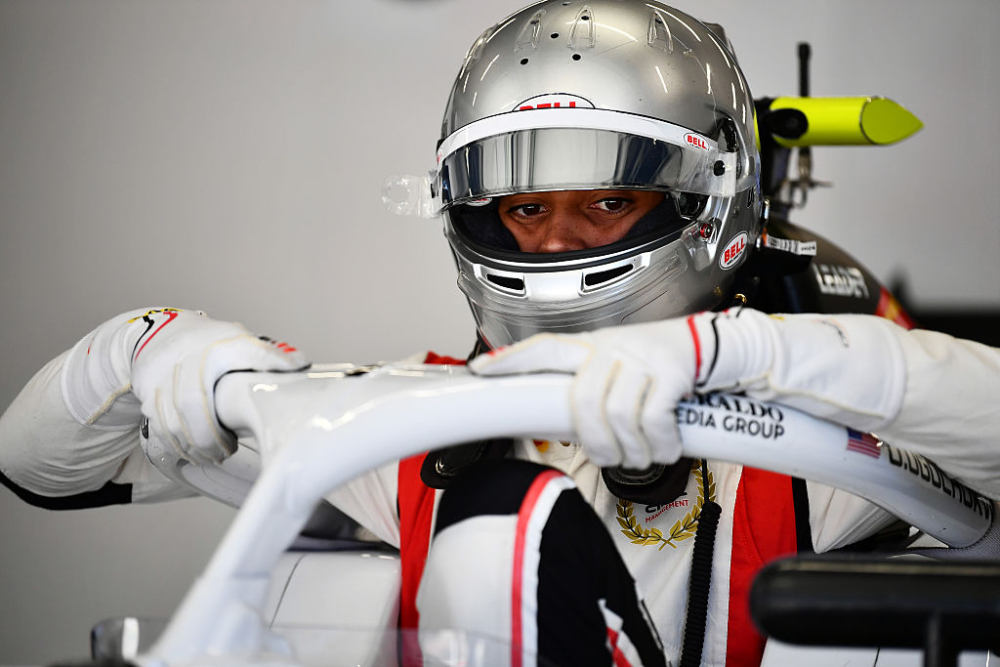
Drivers can take thewir seats and things like pedal setups directly from Formula 3 to Formula 2, potentially aiding taller drivers like Ugo Ugochukwu with the transition. James Sutton - Formula 1/Formula 1 via Getty Images
“That's why we did some changes two years ago to have some smaller handles to make sure that everyone could handle it and the one with bigger hands can add some tape and make it bigger to accommodate their hands. So that's why we want to make sure that we have everyone happy sitting in the car.”
When it comes to different body shapes across genders as well, the window that the feeder series look to provide solutions to seating positions and cockpit settings that work beyond height, and Michot estimates they are able to do so without special changes 99.5% of the time. With that, talent should have a better chance of shining through in both categories.
There has also been a trend for drivers to go back-to-back in winning the F2 title as a rookie, fresh from taking the F3 crown. Five of the nine F2 champions were rookies who had won the level below a year prior, and that has come even before the two series tried to make it easier for drivers to transition from one car to the other.
“One of the good things we've done in the past two years is that we have made sure that the F3 cockpit and the F2 cockpit are the same,” Michot adds. “The monocoque itself is different outside because of the engine, the fuel cell and everything, so there are some different changes on the outside shell but the inside where the cockpit is, where the driver is, it's exactly the same between the two cars.
“So a driver finishing their season in F3 can take their seat, all the measurements of the pedals, steering wheel and so on, and go to an F2 team and start straight away. They don't need to redo a seat and everything. So unless they grow and they need to do it, otherwise they can do it straight away and it's quite nice. For the first time we had it over the winter with F2 teams, and they were quite happy and the mechanics were quite pleased with this.”
If F2 is proving such a successful platform for drivers to perform in F1, then F3 is similarly-placed to provide future champions in F2. It just goes to emphasize the size of the challenge facing Herta, but also provides cause for optimism for the likes of Ugochukwu.
Presented by:

Chris Medland
While studying Sports Journalism at the University of Central Lancashire, Chris managed to talk his way into working at the British Grand Prix in 2008 and was retained for three years before joining ESPN F1 as Assistant Editor. After three further years at ESPN, a spell as F1 Editor at Crash Media Group was followed by the major task of launching F1i.com’s English-language website and running it as Editor. Present at every race since the start of 2014, he has continued building his freelance portfolio, working with international titles. As well as writing for RACER, his broadcast work includes television appearances on F1 TV and as a presenter and reporter on North America's live radio coverage on SiriusXM.
Read Chris Medland's articles
Latest News
Comments
Comments are disabled until you accept Social Networking Cookies. Update cookie preferences
If the dialog doesn't appear, ad-blockers are often the cause; try disabling yours or see our Social Features Support.